Card, mobile credential, payment and security
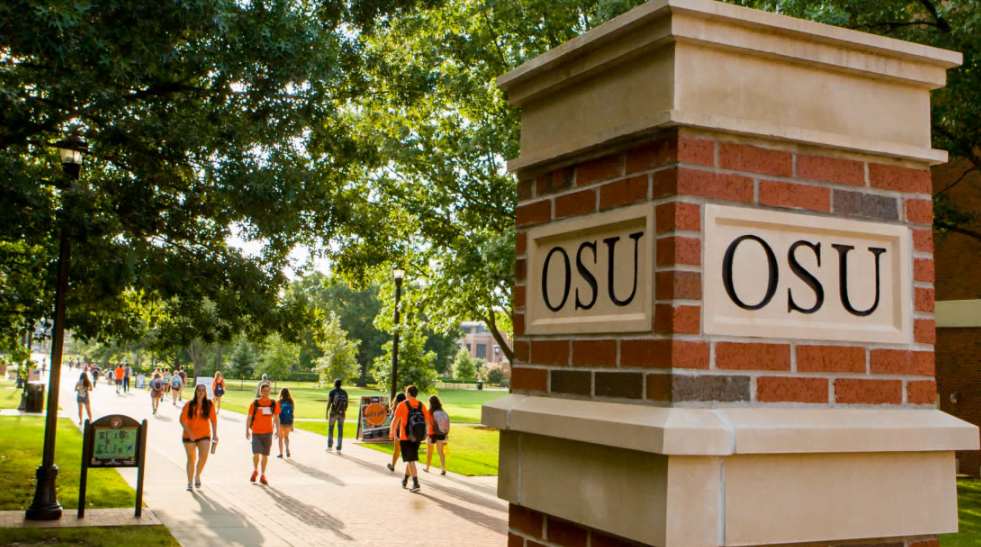
Oklahoma State University has created its own contact tracing system that leverages the university Wi-Fi network and the student ID card. The contact tracing measures are being utilized to proactively reach out to students who may have come into contact or been exposed to individuals that have tested positive for COVID-19.
According to a report from Tulsa's ABC affiliate, the new technology was built in-house at OSU. With the contact tracing data, OSU can provide health officials with a list of students who may have had close contact with a person who is COVID-19 positive and use their contact information to inform them of the potential exposure.
"If we have an individual who tests positive, we can see where they've been on campus," says Christie Hawkins, associate vice president for administration and finance and the director of institutional research and analytics at OSU. On the admin side, the program developed in-house highlights in orange on a campus map the buildings a student entered.
Underpinning OSU's contact tracing project is a combination of student devices connected to the university Wi-Fi network and the student ID card. The data gleaned from those sources can contact trace both the buildings that students entered and the general area -- floor, classroom, etc. -- they were in. The university is also looking at card swipes for meal plans and library access.
In a separate interview with NBC News, Hawkins explains that the contact tracing is meant to be more specific than simply grouping all students who were in a given building at the same time.
“We're not saying this student was in a building and here's all the other students in that building,” Hawkins told NBC News. “It's much more specific and down through a specific Wi-Fi access point.”
The information that OSU is able to glean from its network of Wi-Fi hotspots offers a more detailed view that helps OSU to determine both who to quarantine and who not to quarantine.
“If we know based on Wi-Fi access that another student wasn't in that class that day, we can exclude them from the contact tracing efforts,” says Hawkins.
The Wi-Fi data is cleared after one week and Hawkins said students are not traced in real time. The information from the previous day comes in the following morning.
"Things like Wi-Fi access points are not a data we ever use," stresses Hawkins. "We have no intention of using this again after we're past this health crisis."
The contact tracing measures only apply to the confines of OSU's campus, as only the OSU network is being utilized.